
Miami-Dade · Broward · Palm Beach
AC Repair in South Florida
AC not cooling, leaking or won't turn on? A Cool Air USA technician finds the cause and gives you one flat-rate price in a digital estimate before any work starts. Every repair comes with a 1-year parts and labor warranty.
Same-day service, when available
Stocked vans
Licensed & insured
Family-owned since 2008
 (877) 895-1155
How a repair visit works
What happens on an AC repair visit?
A technician arrives in a stocked van, tests the system to find the cause, and gives you a flat-rate price in a digital estimate. Nothing starts until you approve it. After the repair, the system is tested again and you get a digital report with photos and diagnostics.
-

Book
Call, text or book online. Calls are handled in the order they are received, and most are seen the same day.
-
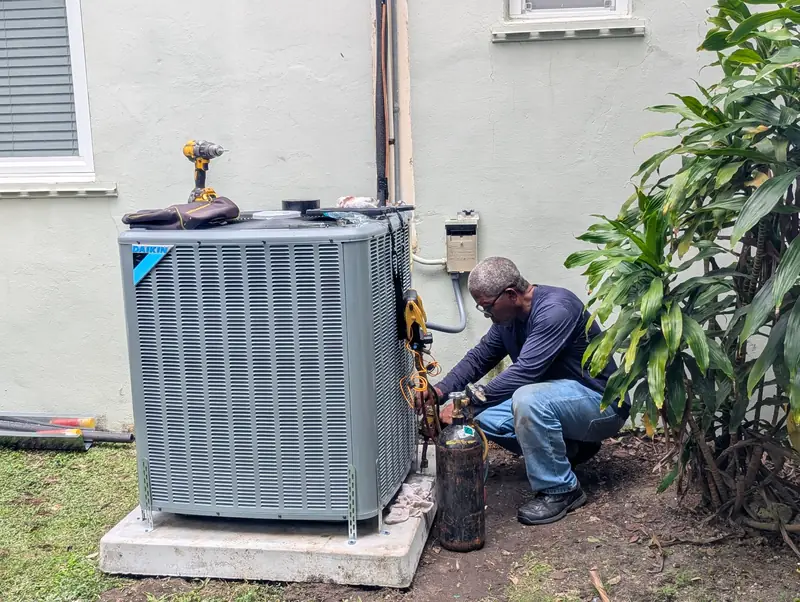
Diagnose
We test the electrical parts, motors and refrigerant pressures to find the cause, not just the symptom.
-
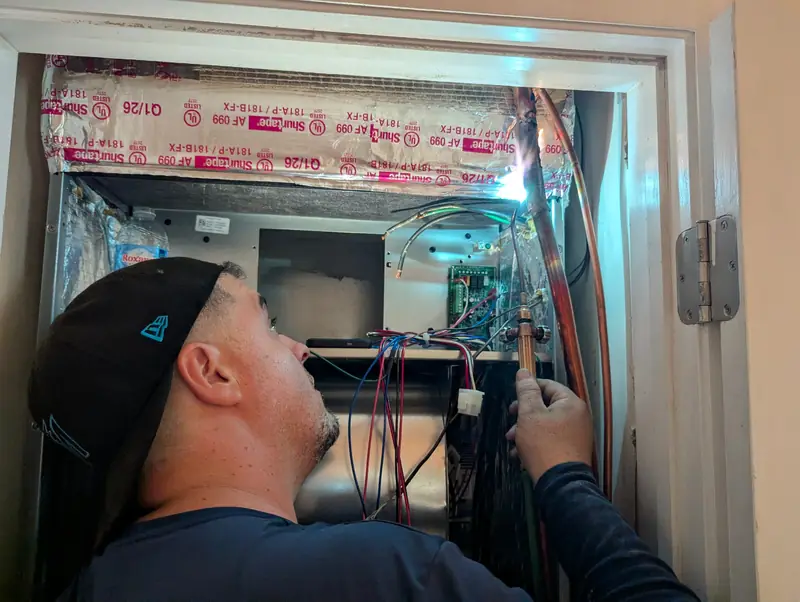
Approve & repair
You get one flat-rate price in a digital estimate. Once you approve it, we make the repair.
-
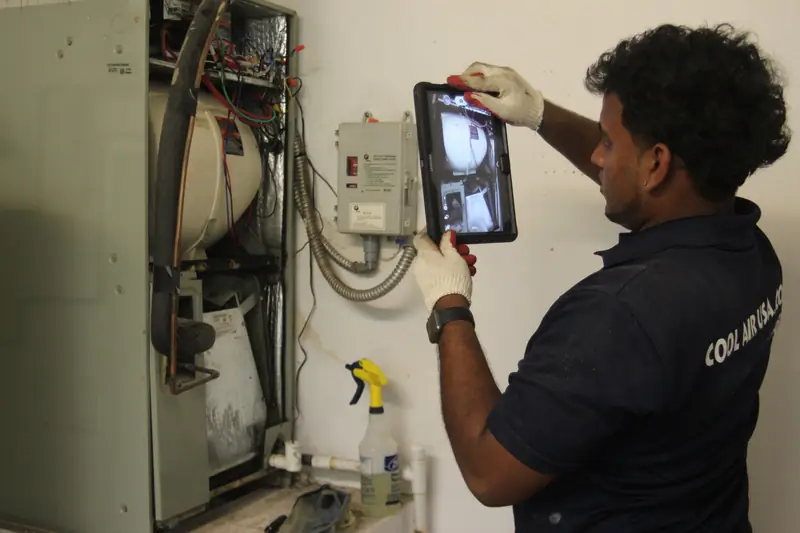
Test & report
We test the system and send you a digital report with photos and diagnostics of what we found and fixed.
What we fix most
What are the most common AC problems?
Most calls come down to a few parts: capacitors, fuses, contactors, motors, thermostats, drain lines and refrigerant leaks. Our vans come to you stocked with the most common parts, so many repairs are finished on the same visit. Compressors, coils and control boards are ordered from the supply house and replaced the next day when the part is in stock.
| What you notice | Common causes | What we usually do | Usually done |
|---|---|---|---|
| Blowing warm air | Failed capacitor, outdoor fan motor, low refrigerant from a leak, or the compressor | Test the electrical parts and refrigerant pressures, then replace the failed part | Same visit for capacitors and motorsNext day, if in stock for a compressor |
| Water leaking | Clogged drain line, full drain pan, or ice on the coil melting | Clear and flush the drain line, empty the pan and check the float switch | Same visit |
| Ice on the unit | Dirty filter, low refrigerant, or a failing blower motor | Until we arrive, set the thermostat to fan on and cooling off so the ice melts. We find the cause and fix it. | Depends on the cause |
| Won't turn on | Capacitor, float switch shut off by high water, thermostat, or control board | Trace the power and controls to the part that failed | Same visitNext day, if in stock for a control board |
| Clicking, humming or grinding | Capacitor, contactor or relay (clicking, humming); motor or blower wheel (grinding, banging); loose filter or panel (whistling) | Find the part making the noise and replace or refit it | Same visitNext day, if in stock for a blower wheel |
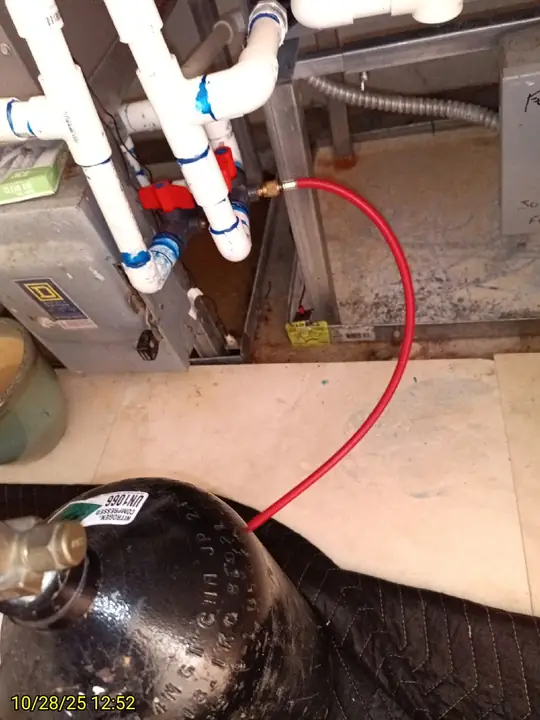
| Refrigerant leak | Leak in a copper line, coil or fitting | Find it with an electronic leak detector, a dye test or an overnight nitrogen test | Same visit to braze small copper leaksNext day, if in stock for a coil |
Not cooling doesn't always mean the compressor. It's the most expensive part to replace, so we test everything else first.
Video reviews
Hear it from our customers
Real Cool Air USA customers, in their own words, after an AC repair. Tap a video to watch it with sound; what each customer says is written out under it.
What they said
Thank you, Cool Air USA. You guys did a great job on my AC. You guys came out really fast, took care of the problem, were very informative. You guys know what you're talking about, and now my house feels much cooler. So I really appreciate your work, and I'll definitely refer you to other people.
What they said
Thank you, Cool Air USA. Thank you for fixing the air conditioner unit. You're very professional, and I will recommend you to anyone.
What they said
Okay, I called Cool Air USA because I had trouble with my air conditioning. They came right away. First of all, I appreciated the service. It was good, good people, and I recommend them to everybody. I will call them in the future, for sure.
What they said
Hi, I just want to let you know that Jack did a great job coming into my house when I had an AC emergency. He came in within two hours. I would definitely recommend them to my friends and family, and we'll come back to Cool Air again with any AC issues.
Before you call
What can you check before you call?
Many AC problems start with something you can check yourself in a few minutes: the thermostat, a tripped breaker, a switch by the unit, the air filter or the drain line. Here is what to check for the four problems we hear about most, and when to call us instead.
What should I do if my AC won't turn on?
Check the thermostat, the breaker and the power switch by the unit, in that order.
- Thermostat: set the system to COOL and the fan to AUTO. If the screen is blank, replace the batteries. Thermostats with a built-in rechargeable battery, like Nest and ecobee, have none to replace, so go to the next step.
- Breaker panel: find the breakers marked AC, AH or CU. Turn each one off, then back on. Reset a tripped breaker only once. If it trips again as soon as you turn it on, leave it off: forcing it can cause more damage.
- Switches by the equipment: look for a light-style switch near the indoor unit and make sure it's ON. Some indoor units have a breaker inside. Don't open or pull out the disconnect box by the outdoor unit; that's for a technician.
- Float switch: many systems have a safety float switch that shuts the AC off when water backs up in the drain pan. If the pan is full, see the leaking water check below.
Call us if the breaker trips again or the system still won't start.
What should I do if my AC is blowing warm air?
Make sure the thermostat is calling for cooling, then check the filter and the outdoor unit.
- Thermostat: set the system to COOL and the temperature below the room temperature.
- Air filter: a dirty filter blocks the airflow. Check it and replace it if it's dirty.
- Outdoor unit: if the indoor unit is running but the outdoor unit is quiet, reset its breaker once, as in the check above.
- Keep the outdoor unit clear of leaves, grass and debris.
Call us if it still blows warm air. The usual causes are a failed capacitor, an outdoor fan motor or a refrigerant leak.
What should I do if my AC is leaking water?
Turn the system off at the thermostat, then check the drain pan, the drain line and the filter.
- Drain line: it's the white PVC pipe coming out of the indoor unit. If it's backed up and the line's exit outside the home is easy to reach from the ground, a wet-vac on it can pull out the clog. Don't climb a ladder or go into the attic, don't push anything into the pipe, and if it doesn't clear, stop and call us.
- Drain pan: if it's full of water, the float switch may have shut the AC off on purpose to stop an overflow.
- Air filter: a dirty filter can freeze the coil, and the ice leaks as it melts.
- To prevent clogs, pour a cup of distilled white vinegar down the drain line every 1 to 3 months.
Call us if water keeps coming or the pan is full. A drain line flush usually takes 30 to 45 minutes.
What should I do if my AC is frozen?
Set the thermostat to fan ON with cooling OFF so the moving air melts the ice faster. If you're not sure how, turn the system off.
- Ice can show up on the copper pipes, the indoor coil or the outdoor unit.
- Check the air filter: a dirty, clogged filter is a common cause.
- Leave the system off cooling until the ice is gone.
Call us to find the cause. A frozen system can't be diagnosed or charged with refrigerant until it thaws, so thawing it before we arrive saves time on the visit.
Want to go step by step? Our AC troubleshooter covers 10 common problems with safe checks, tips and what the visit costs.
Open the AC troubleshooter →After hours
Need emergency AC repair after hours?
Call or text anyway. After 7 pm, Cool Air USA Live Dispatch answers, every day of the year. An AC that isn't cooling, or heat that isn't heating, is an emergency call, and we send the next available technician. Our emergency team takes only the calls it can handle well, so if tonight is already booked, we tell you and reserve an early-morning visit for you.
It's an emergency when
- The AC isn't cooling after 7 pm
- The heat isn't heating after 7 pm
Turn it off first
- Burning or electrical smell: switch the AC off at the breaker
- Water coming through the ceiling
- Smoke or sparks: call 911
While you wait
- Keep doors and windows shut
- Run ceiling and portable fans
- Sleep in the coolest room of the house
- Check on older family, kids and pets
From 7 pm to 7 am: a $100 emergency fee applies, every day, including weekends and holidays. The $79 diagnostic for homes is still waived with any repair ($99 for businesses). A reserved morning visit is a regular visit, with no $100 emergency fee. See the cost table
See some of our work
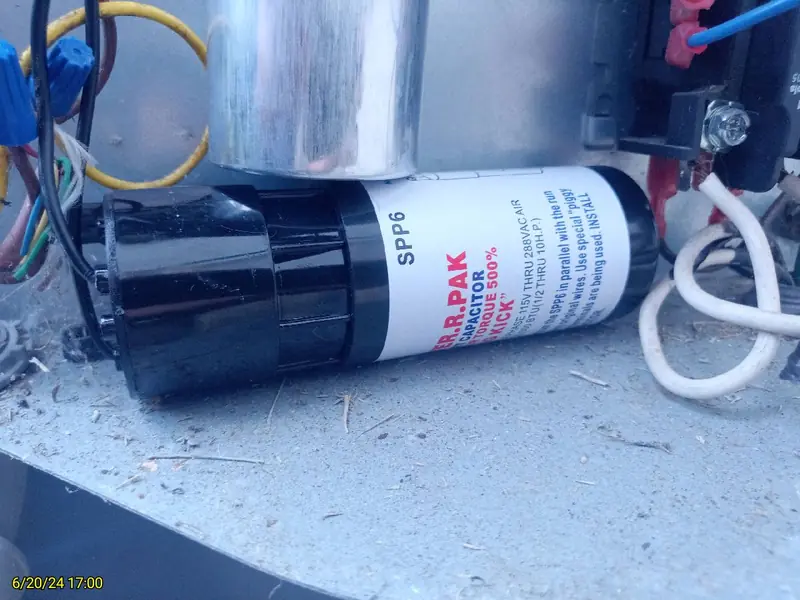
Photos and reports on every job
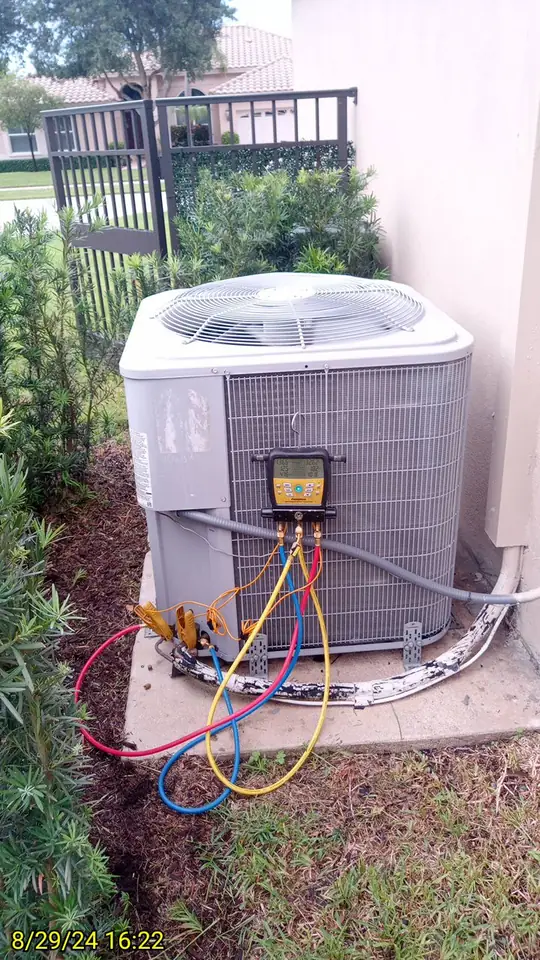
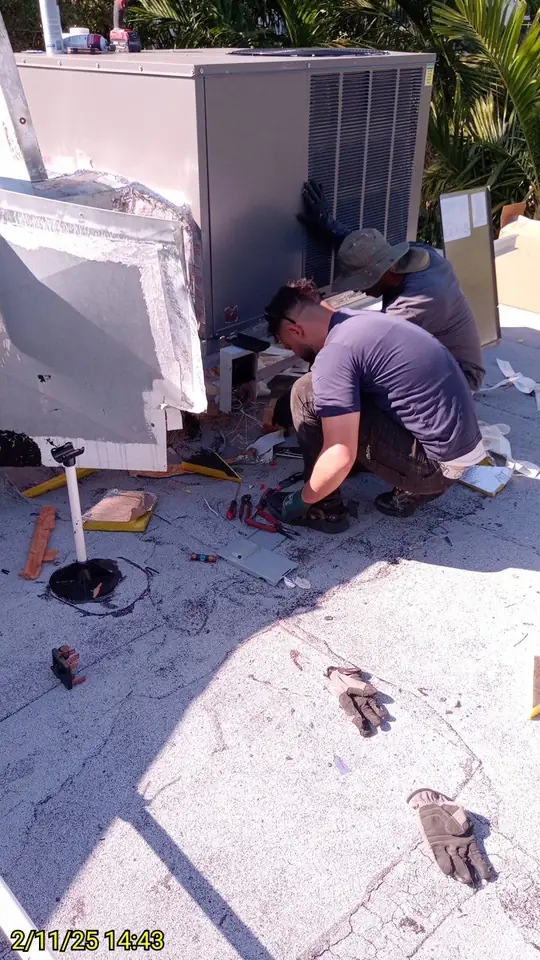
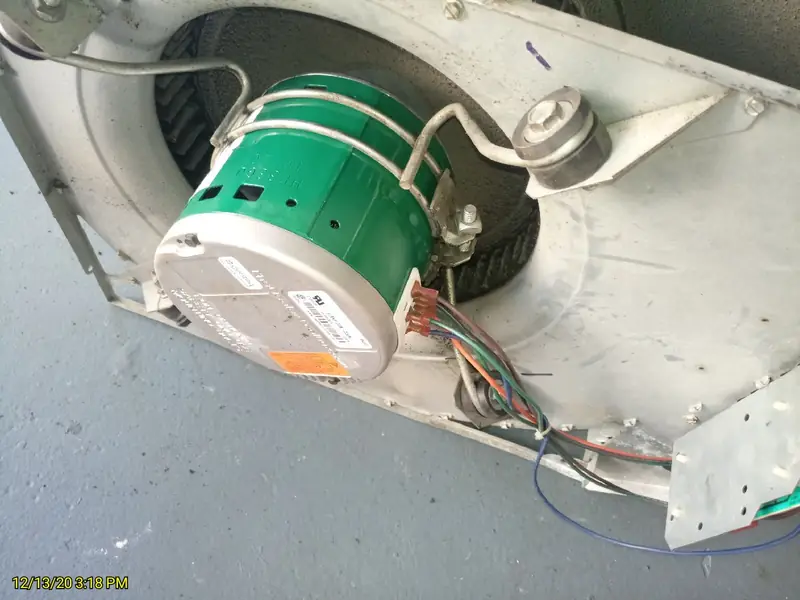
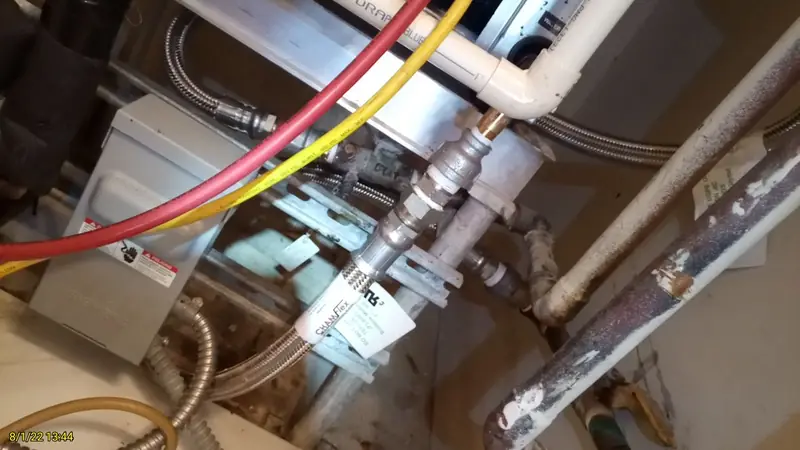
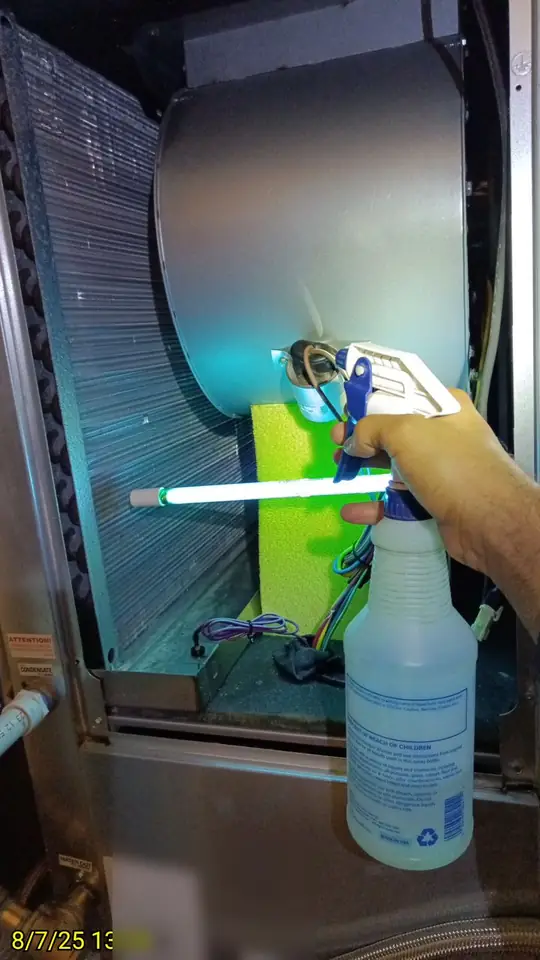
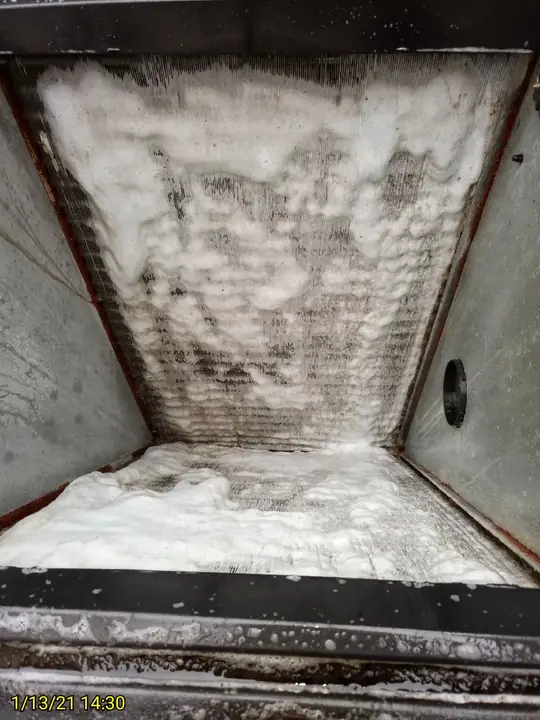
Real photos from Cool Air USA repairs. Every visit ends with a digital report with photos and diagnostics.
Cost & time
How much does AC repair cost?
Every repair is flat-rate, priced in a digital estimate before work starts. The diagnostic visit is $79 for homes, waived with any repair, and $99 for businesses.
| Homes | Businesses | |
|---|---|---|
| Diagnostic visit | $79, waived with any repair | $99, plus the repair |
| 7 pm to 7 am, every day | + $100 emergency fee | + $100 emergency fee |
| The repair | Flat rate, in a digital estimate before work starts | Flat rate, in a digital estimate before work starts |
| Estimate for a new system | Free | Free |
How long does an AC repair take?
Most repairs take between 30 minutes and 3.5 hours on site, including the diagnostic. Parts we order, such as compressors and coils, are installed the next day when the supply house has them in stock.
| Repair | Usual time on site |
|---|---|
| Drain line flush | 30 to 45 minutes |
| Fan motor cleaning or replacement | 1 to 1.5 hours |
| Evaporator or condenser coil cleaning or replacement | 2.5 to 3.5 hours |
Typical times for a single-family home, counted from when the technician arrives, including the system diagnostic.
Repair or replace
Should you repair or replace your AC?
Most air conditioners here last 8 to 14 years, depending on maintenance, how hard they run and how close they sit to the ocean. When the system is younger, or the problem is a capacitor, motor or drain line, a repair usually makes sense. If the compressor or a coil fails on an older system, compare the repair price with a free estimate for a new one. The choice is yours.
| Your situation | What usually makes sense | Why |
|---|---|---|
| Capacitor, motor, drain line or thermostat problem | Repair | These parts are on our vans and are usually replaced on the same visit. |
| System still under the manufacturer's parts warranty | Repair | The manufacturer covers the part. You pay for the labor only. |
| Older system running on R-22 | Repair if the problem is electrical. If it needs refrigerant work, get a free replacement estimate. | We still replace capacitors, contactors, control boards and motors on R-22 systems, but we don't do refrigerant repairs on them: R-22 has been phased out and is in short supply. |
| Leaking evaporator or condenser coil | Compare both | A leaking coil can't be patched. It has to be replaced, the next day when the part is in stock. |
| Compressor failure on an older system | Get a free replacement estimate | The compressor is usually the most expensive part to replace. |
Thinking about a new system? See AC installation and financing options.
Service areas
AC repair near you
We repair air conditioning across Miami-Dade, Broward and Palm Beach counties from our office in Lauderhill.
- Miami
- Fort Lauderdale
- Hollywood
- Pembroke Pines
- Miramar
- Miami Beach
- Plantation
- West Palm Beach
- Boca Raton
- Coral Springs
- Hialeah
All areas: Miami-Dade County · Broward County · Palm Beach County
FAQ
AC repair questions
Why is my AC blowing warm air?
The most common causes are a failed capacitor, a failing outdoor fan motor, or low refrigerant from a leak. Many people assume it's the compressor, but that's often not the case. Our technician tests the electrical parts and refrigerant pressures to find the real cause, then gives you a flat-rate price in a digital estimate before any work starts. Capacitors and universal motors are on our vans, so those repairs are usually done on the same visit.
Why is my AC leaking water?
Usually the drain line is clogged, so the water from the coil has nowhere to go. A full drain pan, or ice on the coil that melts, can also cause a leak. If your system has a float switch, it may have shut the AC off to stop the overflow. We clear and flush the drain line, empty the pan and check the float switch, usually on the same visit.
Why is my AC freezing up?
Ice on the coil or copper lines usually comes from a dirty, clogged filter, low refrigerant from a leak, or a failing blower motor. Until the technician arrives, set the thermostat to fan on with cooling off: the moving air melts the ice faster. If you're not sure how, turn the system off. A frozen system can't be diagnosed or charged with refrigerant until it thaws, so this saves time on the visit. We find the cause, fix it, and test the system before we leave.
Why is my AC making noise?
Clicking or humming usually points to an electrical part such as a capacitor, contactor, relay or transformer. Grinding or banging usually means an unbalanced motor or blower wheel. Whistling is often a filter that isn't seated right or a panel that isn't closed. Our technician finds the part making the noise and gives you the price before fixing it.
Why do my lights flicker when my AC turns on?
It's common in South Florida homes, especially with older AC units. The moment the compressor starts, it draws the most power it uses all cycle, several times its normal running amps, for a split second. Lights on the same electrical panel can dim while that happens. A technician can install a hard start kit. It helps the compressor start faster and with less strain, so in most homes the dimming gets shorter and less noticeable. If the lights stay dim for more than a moment, the flicker is getting worse, or a breaker trips, call us. That can point to a weak capacitor or a loose electrical connection.
Is the diagnostic fee waived if I go ahead with the repair?
For homes, yes. The visit is $79, and it's waived when you approve any repair or service. Businesses pay a $99 diagnostic fee plus the repair. After 7 pm, a $100 emergency fee applies to homes and businesses. Every repair is priced flat-rate in a digital estimate, so you know the full price before any work starts.
What warranty comes with an AC repair?
Every repair comes with a 1-year parts and labor warranty. If a part we installed fails within that year, we come back and fix it.
Can you fix my AC the same day?
Same-day service, when available. Calls are handled in the order they are received, and most are seen the same day. Our vans carry capacitors, universal motors and hard-start kits, so many repairs are finished on the first visit. Parts such as compressors, coils, fan blades and control boards are ordered from the supply house and are replaced the next day when the part is in stock.
What counts as an AC emergency?
After 7 pm, an AC that isn't cooling, or heat that isn't heating, is an emergency call, every day of the year, and we send the next available technician. Our emergency team takes only the calls it can handle well, so if tonight is booked we tell you and reserve an early-morning visit. If you smell burning, switch the AC off at the breaker; for smoke or sparks, call 911. After 7 pm, a $100 emergency fee applies.
Should I call after hours if you're already booked?
Yes. If tonight is already booked, we tell you and reserve your place in line for the morning. Morning appointments fill up fast, so calling the night before helps. That morning visit is a regular visit, with no $100 emergency fee. Real people answer 24/7, and calls are handled in the order they are received.
Do you service R-22 air conditioners?
Yes, for electrical repairs. On R-22 systems we replace capacitors, contactors, transformers, control boards and motors. We don't do refrigerant repairs on R-22 systems, such as fixing leaks or adding refrigerant, because R-22 has been phased out and is in short supply. If your R-22 system needs refrigerant work, a new system is the way forward, and the in-home estimate is free.
Which AC systems do you repair?
We repair central air conditioning in homes and businesses: split systems (an outdoor condenser and an indoor air handler), package units, pancake air handlers in apartment ceilings and water-source heat pumps in condos and high-rises, and commercial systems up to 25 tons. On older R-22 systems we do electrical repairs but no refrigerant repairs. We don't work on window, wall or mini-split units, chillers, cooling towers or water pumps, systems over 25 tons, or car and RV air conditioning.
How do you find a refrigerant leak?
We start with an electronic leak detector. If that can't pinpoint the leak, we use a dye test, or on split systems an isolation test: the coils and copper lines are separated and filled with nitrogen overnight, and a drop in pressure shows which part is leaking. Small leaks in copper lines can often be brazed the same visit. A leaking coil has to be replaced.
Why is my outdoor unit running but my indoor unit isn't?
Turn the AC's breaker off and back on once. If the house already reached the set temperature and the outdoor unit keeps running, the contactor, the switch that turns the outdoor unit on and off, may be stuck, and cutting the power can release it. If the house hasn't cooled, the indoor fan motor may be failing, and a power reset can bring it back for some temporary cooling. Either way, call us to replace the part.
Why does my high-rise AC shut off after the building's cooling tower maintenance?
Condo and high-rise units called water-source heat pumps run on water from a cooling tower on the roof. Debris loosened during tower maintenance can travel down the water line and clog your unit's heat exchanger or strainer (not every system has a strainer). Less water reaches the coil, the pressure rises, and the unit shuts off on its high-pressure safety switch, often in under 30 seconds. Resetting the breaker won't fix it. Call us to schedule a service call and cleaning. Buildings usually ask residents to turn the AC off and close its water valves during tower maintenance.
Why does my heat smell like burning the first time I turn it on?
That's common. Dust settles on the heating element during the months it isn't used, and it burns off as the element heats up the first time. If it smells electrical, gets stronger or doesn't go away, turn the heat off and call us.
More questions? See our complete HVAC & plumbing FAQ, or call or text (877) 895-1155, a real person answers 24/7.
Ready to schedule your repair?
Same-day service when our schedule allows, free estimates on new systems, flat-rate pricing, and real people answering the phone 24/7.